Understanding a 0 Fraud Score with Residential RDPs

A 0 fraud score is a result from a particular scoring product under particular conditions—not a universal certificate that an IP, device, person, or transaction is safe. Some IP-rating services can return zero. Other products use different scales, and a platform’s account decision can involve information that an IP lookup never examines.
For residential RDP buyers, the useful objective is to understand the promised delivery condition and verify it reproducibly. Ask which vendor, product, fields, and timestamp support the claim. Do not assume a Windows desktop, graphics card, or household ISP name can force every fraud engine to return the same result.
IP reputation and transaction risk are different measurements
An IP-reputation assessment examines network-related evidence associated with an address. A broader fraud assessment may combine that evidence with transaction, account, device, or behavioral information. Two numbers called risk scores can therefore describe different objects and cannot be compared as though they were identical test results.
| Service | What to examine | Important interpretation |
|---|---|---|
| IPQS | Fraud score and individual proxy, VPN, network, and abuse-related response fields | Review the named API and supplied context, not just one number |
| Scamalytics | IP fraud score and the lookup’s supporting network and proxy information | A result is a vendor assessment of that address at the time checked |
| MaxMind minFraud | Overall transaction risk score separately from IP-related fields | The overall risk_score uses a different meaning and does not reach literal zero |
Consult the primary references: IPQS response parameters, Scamalytics IP lookup, and MaxMind minFraud responses. MaxMind documents its overall risk_score on a 0.01–99 scale and explicitly excludes zero and 100. That alone makes a promise of zero across all three products misleading.
Residential does not mean undetectable or permanently trusted
A residential classification identifies a network characteristic. It does not establish how the connection is being used or whether a particular account holder is authorized. IPQS exposes separate residential or connection-type information and proxy-related signals; MaxMind also documents residential-proxy indicators. An address can be ISP-associated without being outside the scope of proxy detection.
Shared usage, routing changes, newly observed activity, and database updates can affect a later assessment. Conversely, an unfavorable result can be a false positive. Treat either outcome as evidence to investigate rather than proof of a person’s intentions. A delivery-time observation should not be advertised as a permanent account-access guarantee.
What a full Windows desktop adds
A Windows residential RDP supplies an execution environment for applications, files, and browser sessions. It is useful when you need the workspace itself. A proxy supplies routing for supported traffic in an environment you already operate. Neither arrangement automatically produces a flawless reputation score, and a GPU does not erase network history.
Keep device and account information accurate. Browser rendering characteristics and IP metadata are different inputs, and changing one does not establish that all others are acceptable. Our RDP-versus-proxy comparison explains the architecture without treating it as a method of defeating verification.
A legitimate delivery-time reputation audit
- Identify the promised criterion. Ask which scoring vendor and product the provider uses, and what result is guaranteed at delivery.
- Confirm the actual exit. Record the outbound address observed from the desktop, separately from its inbound RDP endpoint.
- Record the context. Keep the timestamp, vendor, relevant response fields, and documented test conditions. Redact secrets and account data.
- Compare like with like. Do not compare one vendor’s transaction score with another vendor’s IP-only result.
- Raise discrepancies promptly. Send the provider a concise, reproducible report under the applicable delivery and refund conditions.
Keep the audit limited to your assigned service and use each vendor’s authorized access method. The goal is to verify a purchased specification, not cycle identities or manipulate browser signals until a platform’s protection is bypassed. A service disagreement should be resolved through evidence and support.
What to ask about ClovRDP’s premium claim
ClovRDP’s Premium Residential page advertises a zero fraud score at delivery and selected-country ISP sourcing. Confirm the assessment vendor, exact field, test time, and relevant exclusions for your order. The public claim does not establish zero results across IPQS, Scamalytics, MaxMind, and every service using its own internal risk system.
Compare the premium offering with Cheap Residential, which explicitly uses a shared residential IP. Choose according to the documented network requirement, resources, and price. Do not assume that the least expensive plan carries the premium delivery criterion or the same commercial protections.
Read the acceptance conditions before running tests
The ClovRDP refund policy excludes Cheap Residential from refunds and replacements. Eligible requests must be submitted within 12 hours and are excluded above 100 MB usage; provided Windows installation charges are non-refundable and issue review applies. The specific Residential/Premium delivery-time VPN/proxy-detection provision is not necessarily the same as a general fraud-score promise. Ask support to clarify the criterion and how the provisions interact.
Also verify Windows configuration, application compatibility, and applicable Windows 10 ESU coverage. A low IP score is not a substitute for a patched, access-controlled desktop.
The useful promise is a verifiable one
A named vendor, a defined delivery criterion, and a documented resolution process are more useful than a blanket assertion of zero risk. Buy a service you can evaluate accurately, and continue following the account and identity requirements of every platform you use.
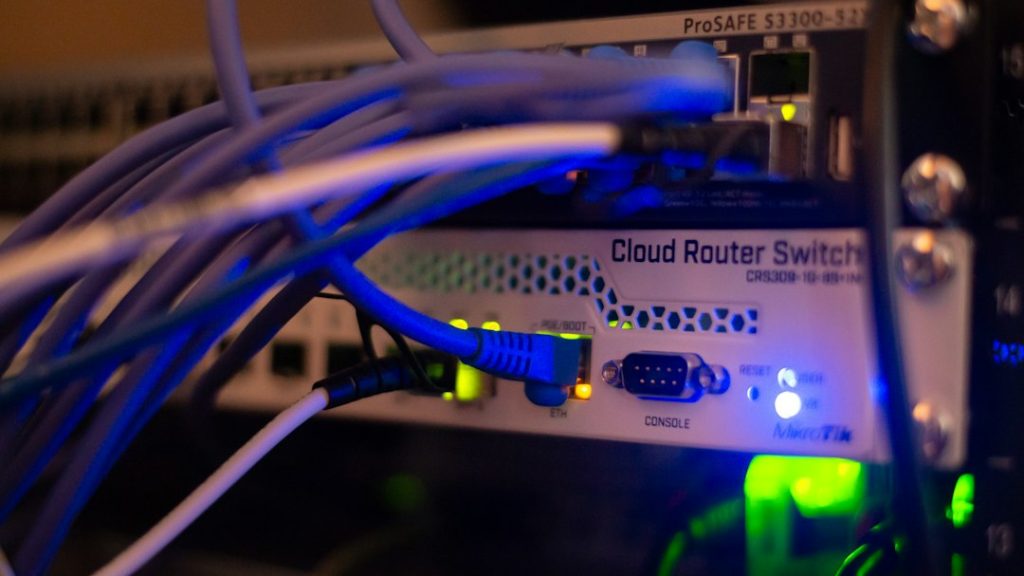
Illustrative photograph by Markus Spiske on Unsplash.
Choose documented IP quality rather than a universal-score promise. Review ClovRDP’s premium specification and confirm the assessment and refund terms before ordering.