How to Safely Manage Multiple Social Media & Ad Accounts Using Residential RDPs

A residential RDP can give an authorized marketing team a consistent Windows workspace with residential outbound connectivity. It cannot make accounts invisible, bypass verification, or guarantee protection from bans. The useful objective is a repeatable, auditable workflow that keeps client assets and permissions organized.
Managing several brands becomes risky when staff share passwords, save client files in the wrong folder, or approve changes from the wrong browser session. A thoughtfully managed remote desktop can address those operational problems. Its value comes from the combination of a familiar working environment, deliberate access controls, and documented network configuration.
Why unfamiliar connections can prompt account checks
An IP address is only one part of an account’s security context. Microsoft’s published identity-risk documentation includes anonymous IPs, unusual travel, and unfamiliar sign-in properties. These examples explain why network context can matter, but they do not establish how any particular social-media platform scores a login.
A datacenter address does not automatically mean an account will be banned. Likewise, a residential address does not establish that a user is authorized. New devices, stolen sessions, unusual activity, payment issues, and policy breaches are distinct concerns. Avoid providers that promise an IP alone will solve them all.
Consistency, not concealment: keep a documented work environment for legitimate client activity. Do not create replacement accounts to evade enforcement or misrepresent who owns a business.
Start with official business access
Before renting desktops, establish who owns each account and what your agency is authorized to do. Use the platform’s supported business or partner-access features rather than distributing the owner’s personal password. For example, Google Ads manager accounts support managing linked client accounts and assigning different access levels.
The residential RDP sits underneath that permission model. It is where an authorized team member works, not a replacement for the client’s invitation or for the platform’s rules. Keep a client approval record, name a recovery contact, and record who can change billing or add other users.
Choose the right separation boundary
| Control | What it helps with | What it does not guarantee |
|---|---|---|
| Official account roles | Authorized access and revocation | A secure endpoint by themselves |
| Separate browser profiles | Reducing cookie and session mix-ups | A strong security boundary against local administrators or malware |
| Separate Windows workspaces | Separating client files, tools, and operating procedures | Different public outbound IPs unless specified |
| Residential outbound routing | A documented residential network context | Account approval, anonymity, or exemption from verification |
| MFA and recovery controls | Reducing reliance on a password alone | Protection against every session-theft or phishing scenario |
For clients with different confidentiality requirements, a separately administered desktop can be easier to audit than a single machine containing every client session. For a small team working inside one official manager account, separate desktops for every advertising account may add cost without improving authorization. Select a boundary that addresses the actual data risk.
Build the workflow in six steps
1. Document the client and the permitted tasks
Create a short record containing the client name, asset IDs, authorized staff, approval contacts, and permitted activities. Keep billing permissions separate from routine campaign editing wherever the platform allows it. A desktop should have an accountable owner, not a password passed informally between contractors.
2. Confirm the desktop and network specifications
Ask the provider to distinguish the RDP connection address from the outbound residential IP. Record the selected country, sharing arrangement, expected persistence, and what happens if residential routing fails. Do not assume several desktops receive different public addresses. For a location-dependent project, obtain permission for that location before working there.
3. Secure remote access before adding credentials
Use named accounts, strong unique passwords, and an approved access gateway with MFA where available. Keep Network Level Authentication enabled; Microsoft recommends NLA because it authenticates users before establishing the remote session. NLA itself is not MFA. Restrict unnecessary device, drive, and clipboard redirection.
4. Organize tools without falsifying identity
Name workspaces and browser profiles after the real client or project. Use approved password storage and keep recovery codes outside the desktop in an organizational vault. Do not synchronize every client’s saved passwords into a personal browser account. Use accurate account and business details rather than attempting to disguise common ownership.
5. Keep a change and incident log
Record significant access changes, desktop replacements, outbound-IP changes, and account warnings. When a platform requests verification, stop and follow its official process. Preserve the warning and relevant timestamps, notify the client, and investigate the actual cause instead of repeatedly changing networks or creating another account.
6. Offboard completely
Remove the departing person’s platform permissions and desktop access, revoke active sessions where supported, and rotate shared secrets that cannot be individually revoked. Confirm retention and deletion of exported client data. Cancelling the RDP subscription alone does not revoke access granted directly on an advertising platform.
Why Windows 10 Pro can fit the workflow
A configured Windows 10 Pro desktop brings browser work, spreadsheet analysis, screenshots, and compatible client tools together. That familiarity can simplify an agency’s operating procedure. It still needs a security lifecycle: standard support ended October 14, 2025, so verify applicable ESU coverage or use a supported OS. Check software compatibility separately.
Selecting a ClovRDP tier without overbuying
Compare ClovRDP’s budget range for lighter workloads with Premium Residential for requirements matching its documented ISP offering. Select enough desktop resources for your actual dashboards and exports. Confirm Windows 10 Pro configuration and charges; the advertised starting price is not automatically the total for every option.
Before ordering, read the refund policy. Cheap Residential has no refund or replacement eligibility. Eligible services have a 12-hour request window, a 100 MB usage limit, issue review, and non-refundable provided Windows installation charges. Residential and Premium Residential also have a delivery-time VPN/proxy-detection provision; confirm how it interacts with those conditions. Do not treat it as protection against a social platform’s later decisions.
Can one residential RDP safely hold several accounts?
It can be appropriate for accounts you are authorized to manage, provided platform rules, access roles, and data-separation requirements are satisfied. There is no universal rule requiring one IP per account, and there is no universal residential-IP exemption from enforcement. Document the arrangement instead of relying on a stealth claim.
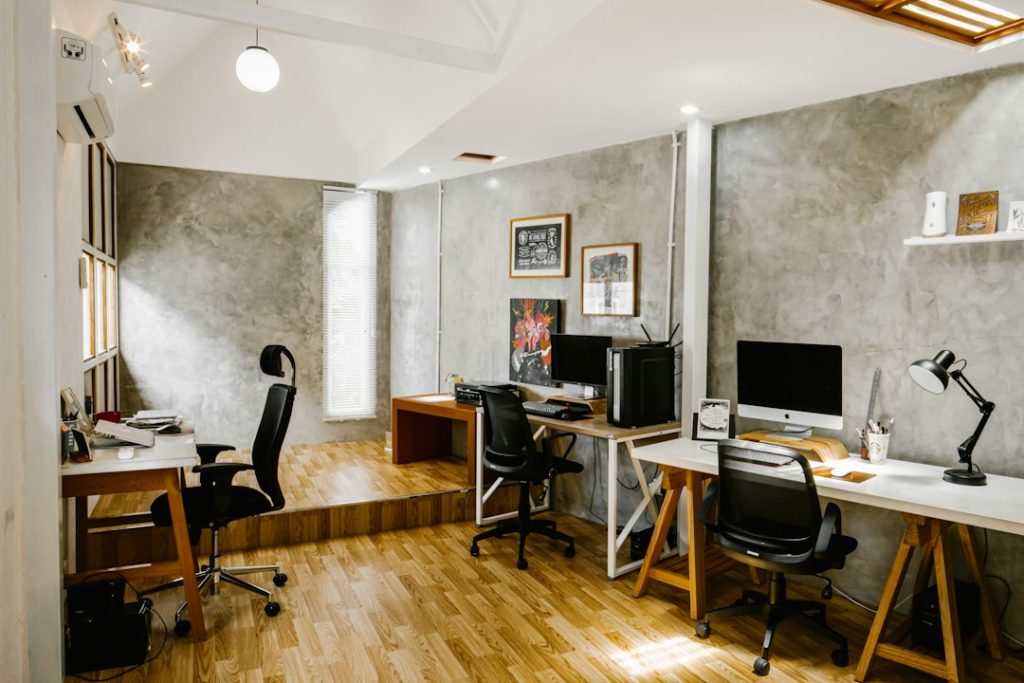
Hero photograph: Carlos Muza on Unsplash. Illustrative analytics workspace.
Give your authorized client work a dedicated place. Explore ClovRDP Premium Residential, confirm the required Windows and network configuration, and review eligibility and exclusions before ordering.